Type 1 Cycling

Type 1 Cycling
Showing posts with label insulin. Show all posts

Sunday, January 26, 2014

Good days and bad days

When you hear people with diabetes talk about having ups and downs they mean it literally. It's not easy controlling your blood sugar, though we have never had so many tools to help us as we do now. We have better blood glucose testers, we have fast acting insulin and pumps to deliver it, we have continuous glucose meters that tell us every few minutes which direction our sugar levels are going, we have a wealth of apps that allow us to track what we eat, what out blood sugar levels are, and how much insulin we take. Some even tell us how much insulin to take and our predicted HbA1c result. And finally we have the Diabetic Online Community - the DOC. The community of people online supporting each other, giving advice and showing people that they are not alone.

Even with all those tools somethings cannot be helped. Sometimes you get it wrong. Conversely there are days when things just go right. There are good days and bad days, ups and downs, highs and lows. This past week has been one such week. Sunday night before bed I was up in the 240s and before bed and after a correction I woke up at 101.  Pretty much perfect.  I tried and experiment that day, instead of taking some insulin and eating I decided not to "insulate" and not to eat before training.  By the time I was setting off for my warm up I was down to 95 and decided that it was time to eat something small.  At the end of training two hours later I was up to 152, exactly why I normal like to take insulin. The result was that by the time I sat down to eat I, which was an hour and a half later I had risen to 233.  The conclusion from this experiment is that I must take some insulin after training especially if I have not had any that morning.

That night I went out and had a late dinner, and way too many carbs which led to high sugar in the morning on Tuesday followed by an over correction leading to a hypo right after my warm up.  This correction was taken into the muscle on my forearm.  It is not advised to inject in the muscle as it tends to make the insulin work much more quickly than normal, but that was my intention.  I had to take it easy in training and ate much more than normal for a two hour session.  Note to self: muscle injections are a no no right before training.  I was fine for the rest of the day.  I forgot for the second day running to test before bed.  Waking up again at around 240.  I corrected again, this time in my stomach.  I started training this time at 212 but 15 minutes later after my warm up I was down to 164.  By the end of the session I was at 91 and my blood sugar remained nice and balanced for the rest of the day.  Success! Some days things just go right.

On Friday I had been fine all day but hadn't tested since lunch and ended up at 233 before dinner at my mother in law's.  She is a wonderful cook and I struggle not to go back for extra helpings.  I made sure to take a higher does of insulin factoring in my high blood sugar and how much food I would be eating.  Never the less I tried to go easy on the carbs.  Before we left for the drive back to Tel Aviv, I tested my blood sugar.  It was 403! I injected 6 units instantly into my forearm.  It did drop a bit but an hour later it was still very high at 329.  My wife insisted on driving home despite my idiotic protests that I was fine, I wasn't.  By the time I went to bed it was still above 200 many hours later so I took another 4 units.  I had had a huge amount of insulin, it was very bizarre.  The following morning I woke up with a level of 122.  This could not have been better.  I drove out of the city to training, injecting a few units before I left and eating a sandwich on the way.  During the 4 hours of training and the rest of the day my sugar levels were perfect.  There was a point just before a big climb that I tested and had 109.  This was a bit of a worry so I ate a second gel, I had eaten one a few minutes earlier.  My trainer insisted that I checked my sugar 5 mins later, which meant after 1Km of the climb the whole team stopped while I tested.  Funnily enough I still set some new PBs on the climb, including the stoppage time.  My performance really is better when my sugar is under control.

live long and stay health.

See my ride here

Sunday, May 19, 2013

Race Day - Negba

This past weekend I had my first race.  Some of the guys from the group have raced before, one or two race regularly.  For me this was going to be a learning experience, as I am hoping to race more in the future.  The next race I plan to go to is the National Amateur championships.  So hopefully everything learned from this race would go towards a better performance at the Nationals.  The race itself for my category consisted of 5 laps of a 15KM course, totaling 75KM, around Kibbutz Negba. For maps and course profile you can see how it looked on strava.

The team before heading to the start line
The team had done some training on the course a couple of weeks earlier so I was familiar with the route.  Mostly it was flat, however there were two steep rises.  They were not major climbs however they would present a challenge staying with the peloton.  I was not going to with this race.  I did set myself some goals.

Negba Kibbutz


  • Stay with the peloton as long as possible.
  • Get comfortable riding in a big peloton
  • If I could help out my teammate who had a chance of winning.
  • Take water while racing
  • Complete the race in a reasonable time
  • Eat enough before and during the race that I finish with good numbers.
  • Have fun
The tl;dr version is that I learned a lot.  Staying in the peleton is hard work.  If you miss the back you will not get back on.  At the end of the first lap I slowed too much to get water.  I could not get back to the peloton and I was left riding out 4 laps at a much slower pace.  I was not able to be much help to Alon, though he still managed to claim second place.  I got much better at taking water while moving quickly on later laps.  I felt that my time for finishing 75KM was pretty good. According to my Strava data I held 225 watts for 2 and a quarter hours, which I think is damn impressive.  I managed to get my eating right and didn't finish the race with blood glucose too high or too low (massive win for me).  I had a lot of fun.

Pictures from the race here.

For those who want more detail read on.

The night before the race Alon came over for dinner.  I had lowered my long term insulin to 22units and I took only 7 units of short term insulin for dinner.  We discussed tactics a little but mainly ate huge amounts of pasta.  A big worry for me usually because so much carbohydrate late in the evening makes me sleepy.  Considering I had to get up early (4:45am) the following morning feeling sleepy early on in the evening was not likely to be a problem.  After dinner I got my bike and kit ready for an early start in the morning.  I checked my sugar before bed and it was in 74mg/dl.  I started second guessing the amount of insulin I took.  I finished everything I had to do and checked once more - 92.  Ok it was heading in the right direction.  I decided to risk it and went to bed.

I woke up at a time that I have previously gone to bed on a Friday night.  Dressed, coffee, blood test 234, a bit higher than I would have liked.  5 units of insulin, to bring myself down and to cover the sandwich that I ate on the way there.

Alon was already attaching his bike to the rack when I got downstairs.  We finished loading up the car and got on our way.  Thankfully the roads were clear and we got to the car park at 5:55.  There were many people there already and a good contingent from our team.  I walked Leehee to the water tent that we had set up on the hill.  Aviv was organizing things, I introduced them and left them too it while I while I started to warm up.


We took a group photo and made our way to the start.  I realised as I was doing my final BG test and grabbing a snack that I still had my glucagon kit on me.  I quickly went to find our support car that would be following my group around, unsuccessfully, and just made it back in time for the start.  Final check before the start, 229, I stuff half an energy bar in to my mouth and waited with my teammates.  We got moving at a decent pace.  Generally I was feeling fine, a little anxious about being in a large peloton but I was up for it and I felt like I could hang with the pace.  I was getting used to the movement of the group and trying to get into a rhythm.  But my legs weren't feeling nearly as relaxed as I wanted.  My glutes and hamstrings were really tight and worse my heart rate was at 171bpm.  This was really bizarre because at this level I should have been struggling, but I felt ok and I was getting the power out of my legs.
some of the elite racers coming past the water tent.

The first lap was at quite a pace and I was happy that I stuck with the peloton.  I was pretty happy that considering my high heart rate which was starting to settle down and my tight legs I was still able to ride in the pack.  It was all a bit nervous, certainly that's how I felt and I figured others were this way as well.  There was a lot of jostling for position, I was finding myself near the front and within a few moments near the back.  I worked myself into the middle but I was on the right hand side coming towards the end of the lap where the team water point was.  I couldn't find away through so I let myself go back to the pack and round to the right hand side of the road to get water.  I collected the water from Aviv at pace but too slow to stay on the back of the pack, the next 50 meters continued to rise and I had to put in a big dig to catch them.  Unfortunately I could not.  The pack were getting away from me and I was fast approaching my limit. 

dropping off a bottle 
I chased hard, giving it everything.  I took a corner too wide and almost crashed out, thinking if I could just make it up the next rise I could go all out on the descent and catch up.  I could see them pulling away with every peddle stroke and towards the end of the down hill they were out of site and I knew I had no chance.  I saw some individuals in front of me and as I got closer I saw some green shirts.  They were members of X-Team from the 40+ and 50+ starts.  I caught and passed them and Shai came back up to my wheel and we decided to work together for the rest of the race.

I was now at a much more comfortable pace, switching between leading, on the flat and downhill, and following on the rises.  My heart rate had come down into the mid 160s and my legs were loosening up.  I could now think about feeding.  I was worried that my sugar might be dropping after the second lap and I had a gel and some energy chews.  I was trying to eat something small but regularly.  Alternating between energy gels, bars, dates and chews.  I mistakenly did not record exactly what I ate but made sure to eat something small when I could.  I drank at least a bottle a lap.  My first two bottles had electrolyte and the rest were just water.

As the race went on we got passed by the Elite riders and they flew passed us at quite a pace.  The last lap I was feeling really good.  I was glad when it start to rain briefly that we weren't in a big group.  The roads were very slippery and it caused many accidents around the course.  We came up to a big group from X-Team, they were not riding so quickly so Shai and I went past them.  I rode up the rise following the turn off the main road, able to stand up on my peddles and power up the hill.  I took the down hill carefully and when I saw that I was riding away from Shai I slowed up and let him come to my wheel.  Eventually though he couldn't hold my pace and I rode away.  Finally on the last hill, I pushed myself.  I stood up on the peddles and gave it what I could.

Final lap, final hill.
I have never been so motivated coming passed my wife and the rest of the X-Team crew in the water tent loudly cheering me on giving me the power to speed up the final rise and on to the finish.  I was about 15 minutes behind the peloton.  Not as good as I was hoping but still happy that I finished and certainly good that I did not get lapped.

pushing hard to finish strong
The most encouraging part was that I finished the race with a blood glucose of 146mg/dl.  This is better than I had expected.  Not too high or too low.  I had something to eat to keep my sugars from dropping and went to the awards ceremony.  Out team did quite well.  Alon came second in our race, the 30-39 category.  We also got second in mens 60+, womens 30-39, and second and third in women's 50+.
Alon in second place 30+
Avi in second place 60+
Vered in second place womens 30+

Following the ceremony the team got together and had brunch.  It was a great day, everyone had a good time.  There were a couple of scrapes but we all survived the race well.
Team brunch

I look forward to the next one.

Wednesday, April 24, 2013

Gran Fondo Hermon 2013

This was to be my first time riding in a Gran Fondo.  I have done other much shorter organised rides, but this was different: Timing chips, stops along the way to fill up with water food and isotonic drinks, closed roads, and support vehicles.  I signed up weeks ago for the full 170km ride along with a few guys from my club (X Team). Some others signed up for the 100km start. Regardless there was going to be a lot of climbing
The profile of the 170km, most of the last 100km are uphill!
My Ride

The night before the race I got everything ready and loaded up the car.  Changes of clothes, energy gels, sandwiches.  Everything I could possibly think of.  I went to bed nice and early.  My alarm went off at 4am and I woke up a little disorientated.  I shook it off and tested my blood sugar - 255mg/dl - not a great start to the day.  In the days running up I had lowered my Levermir to 24 units, and I took a lower amount of insulin for dinner the night before.  I took 8 units of NovoRapid and ate a cheese sandwich along with an espresso to get me going.
My food for the day, sandwiches, granola bars, energy bars and gels

My Medic Alert bracelet sill hadn't arrived so I drew myself a little tattoo with sharpie

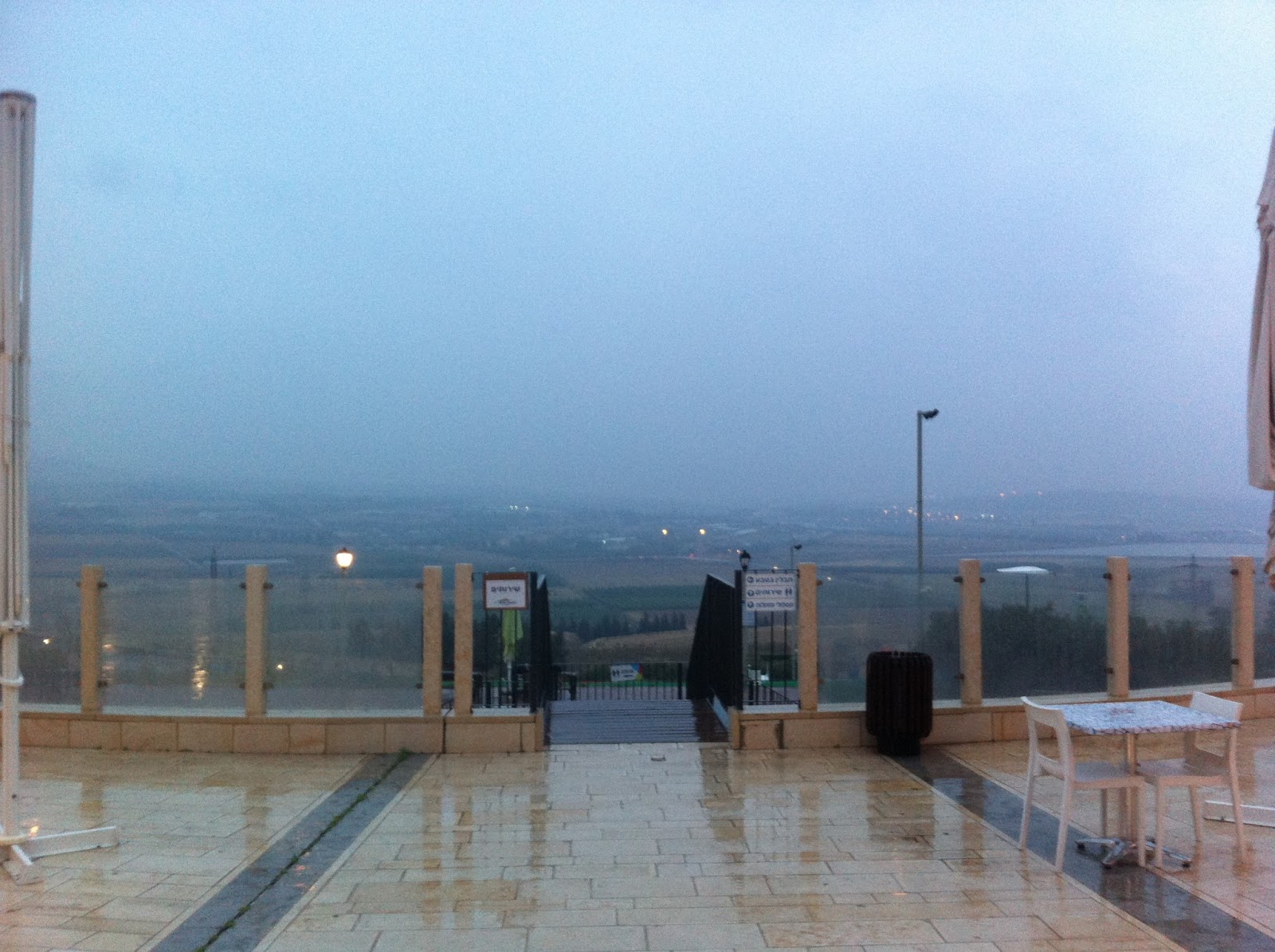
I set off and go to meet Alon, He comes down and we pack the car up just as its starts to rain.  It rains the entire way there and he tells me that it is supposed to be cold and wet at the start.  This is not looking like its going to be the day I was hoping for.  We arrived at the start, still raining, in time for "Sunrise," 6am.  Normally it would be a beautiful view over the Jezreel valley, this day not so much.  Everyone looks unhappy, especially the people directing traffic, just standing out there in the rain.  Two guys from our group are threatening to turn around and go home.  I ran to the coffee shop to get us some coffees, I did a quick test - 277 mg/dl.  Not ideal, but still plenty of insulin on board and when I start riding that's gonna drop fast.
"Sunrise" over the Jezreel valley
Getting ready at 6am in the rain

Miserable looking skies and people
The weather at the start
The weather at the 100km start
Over the course of the next hour the rain stops and it brightens up.  Our team mates decided to stay and there is good humor among the participants while we get ready.  Then an announcement over the speaker.

"We are not starting from here, it's too dangerous.  The roads are too wet."

They were drying out but clearly the police were unwilling to allow us to go the planned route.  We were all invited to the start for short ceremony to remember a fellow cyclist- Gavriel Lerner, killed in a hit and run earlier in the week.  He had registered to ride the Gran Fondo but had been killed while training for it.  His team mates from Eshcolit were all there to commemorate his passing.  We were given black arm bands to commemorate Lerner on this ride.  After the short ceremony we went back to the car and drove to the newly scheduled start.  It was beginning to feel like this year's Milan San Remo. There were a number of groups that rode to the new start.  Some opting to do the climb others rode through the valley and cut out about 30km.  The organizers had said that they were not offering transport back to the original start so we decided to follow the instructions and just drive.

Ceremony for Gavriel Lerner
We arrived at the new start, having passed plenty of groups riding along the way, with plenty of time to spare.  Alon put the seat back and went to sleep for an hour.  I checked my sugar around 815am - 256mg/dl - still high but hungry I took another 7u of insulin and ate half a cheese sandwich.  I went to find the start and go for a little warm up ride and ate a couple of dates along the way.  I realised at this point that I had taken 15 units of NovoRapid since waking up.  Despite being high and having eaten predominantly carbs I was starting to get worried that as soon as I started riding I was going to drop very quickly.  My test just before 9am was 150, this was much better, but worried that I was going to drop more I helped myself to a tea with some sugar and a couple of dates.  Twenty minutes later I was back up at 174 and I was relaxed that things were going to be OK.
Driving through the Jezreel valley

New start and weather was improving
I went back to wake up Alon and we finished getting ready.  I packed food into every pocket that I could and stuffed a bag with more and some warm clothes for the finish.  We rode together to the start and dumped our bags and spare wheels in another team's follow car.  (This turned out to be a huge mistake as we had the option of putting our stuff in a FedEx truck that would take it to the finish. We thought that we would see the car again during the day, sadly we did not.)  One final test just before the start - 138mg/dl.  Finally in my target range, the sun was out.  This was going to be a great day.  I took arm warmers off and slipped them in a pocket.  I still had a short sleeve and long sleeve top on over that, and my bib shorts and leg wamers on too.  I reasoned that I might be a little warm at the beginning but it was definitely going to get colder.

Refreshments at the start
final preparations
Lining up for the start


Lining up for the start
Finally the start. A couple of kilometers of flat and then straight in to an 8KM climb.  There were many switchbacks and tough ramps.  There was nothing to do but stand up on the pedals and grind away on the steepest bits and try to recover on the shallower sections.  My heart rate monitor had me well of 90% for far too much of this climb.  But at the same time I was feeling really good.  The weather was warm and I knew my increase heart rate was partially due to the fact I had too many layers on.  I was encouraged by the fact I was passing a number of people.  At the start I was with a few X-Team guys but none of us were riding at the same pace, while one guy rode ahead of me and a few others trailed behind, I just stuck to what I was comfortable with and found my rhythm.
Leaders on a switch back
Looking back down the hill, riders and their support cars
Climbing
More climbing

Riders in groups drafting on the flatter sections
As the climb flattened out I had reached another member of X-Team, Doron.  Doron and I recovered from the climb and worked well together.  I was worried about the effort I had put in on the climb and began eating.  Between the start and the first stop I ate 2 gels and a granola bar, along with plenty of water with electrolyte.  At some point this train of about 6 riders starts to come past us.  Doron and I pick up the pace and joined the train.  We were hammering on the flatish section at 40+kmph.  My heart rate was coming down and I was feeling good about the rest of the ride.  We made it to the first rest stop.
Pelotons are formed


The first rest stop
I filled up my water with sugary isotonic liquid, drank a bottle of water and ate a granola bar and a gel.  Way too much all at once.  I should have done that more slowly over the next 15 minutes.  My meter read 116 at 1120am, still had some insulin on board and the effort clearly helping keep my blood sugar from rising.  Doron waited for me but the rest of the group we were with had left already.
"I'll take mine to go"
The route was heading uphill in long drags punctuated by short steeper bumps.  Each time I looked at the sky it was less blue, with white clouds turning to grey and the temperature dropping sharply.  We caught our previous group who had slowed their pace.  Then we started to push on.  Soon we were pretty much on our own, passing occasional riders and one or two passing us.  The weather closed in and started to rain.  At first it wasn't so bad, almost refreshing.  The water running down my face and washing the salt into my mouth was less pleasant.  The change in temperature made my legs feel tight and the food in my stomach was giving me cramp.  I told Doron to continue and I kept a slower pace.
Deteriorating weather
I was by myself starting to feel the pain of the earlier exertion and regretting everything.  I was now starting to feel the cold.  I kept pushing myself, knowing at some point there would be some downhill where I could relax even just a bit.  I kept an eye on the time so that I knew when I needed to check.  I kept pushing myself, when I get to the next top I will stop and check. It never came, the cloud was all around me, so every time I thought I was close to a peak it just kept going up.  Finally I was starting to get worried, I knew there couldn't be much insulin left floating around my body but I was cold and working as hard as I could to keep my body temp up.  I didn't just want to eat if I didn't need to.
Riders caught in the downpour
Finally I found some flat ground to stop.  As I unclipped my foot from the pedals I hear a chink of metal on the floor.  One of the bolts from my cleat had fallen out.  I laid my bike on the ground, and fished out a tool from the saddle bag.  It was pointless the thread was gone.  I checked that the other bolts were tight and that there was no movement in the cleat.  All seemed OK.  I put my shoe back on and started checking my blood sugar.  For a while I was standing there completely alone wondering where everyone else had got to.  Then two police bikes came past and told me to stand more to the side of the rode.  The made sure I was ok and carried on.  Then a couple of groups came past and they slowed to check I was OK.  The last group contained two of my team mates, so I quickly finished up and jumped back on my bike.  The meter read 119, an hour and 20 minutes after my previous reading.

Having had a few minutes rest and the terrain flattening out I was motoring along and despite eating a gel and an energy bar along the way I caught up with my team mates (Roni and David) from X Team.  I was feeling good, but it was raining and even hailing hard.  I had no jacket as Roni quickly reminded me.  We turned a bend and the wind hit me.  The rain was driving in to my face.  My sun glasses were no use and were hanging off my jersey but the rain was coming down so hard that I couldn't see anything.  I wanted to climb off my bike and give up, but there was no where that could give me shelter.  I was praying for a petrol station or somewhere that I could stop and take refuge.  Alas nothing.  The road began to go up hill again and I just rode at my own pace.  Drafting was impossible the spray from other bikes was worse than going it alone.  My legs were sore due the cold and I was running low on energy.  I was cold, wet and uncomfortable.  I tried to push myself harder hoping that the increase in heart rate would warm me up.  Unfortunately my legs wouldn't respond.  My heart rate would not go up and I was feeling terrible.  I looked down at my computer and I could see that we were closing in on 65KM.  I remembered from the schedule that there was supposed to be a food stop there.
The second stop for refreshments at Ein Zivan
Soon enough I could see people through the spray pulling off to the side of the road into a car park.  I saw plenty of bikes stacked up against a coffee hut.  This hut turned out to be a shipping container covered in wood, but it was a place to find some respite for many of my fellow riders.  I propped my bike up and ran for cover.  The container was full of cyclists all soaking and freezing, and two increasingly annoyed women trying to sell coffee tea and snacks.  Everyone was happy to pay for a warm drink as long as it kept them inside, out of the wind and rain. Despite most people being very cold and shivering people were in good humour.  Alon was there, he had been way ahead of me but wearing only a short sleeve jersey and cycling shorts.  I watched him shiver for an hour.  Pretty soon we heard that the rest of the ride had been cancelled.  Some had made it 15km further on, in the next town, but no one was going further.  After quite some time coaches were sent to pick us up and take us first to the town where everyone else was and then back to the start.  Two coaches came and filled up quickly.  They sent another one but by this time we had been kicked out of the coffee hut and I sought refuge inside a portaloo.


Everyone crammed into the coffee hut
The coffee hut was full to bursting with cold riders

A few of a nearby winery and fields 
Finally the last coach came and picked us up.  It was a huge relief.  While I was standing in the container I checked my blood sugar it was 186 mg/dl at around 13:21.  Later on the bus at around 1500 I checked again 471 mg/dl.  Where did that come from, there must have been something on my finger.  I checked again 395 mg/dl.  Not ideal but not as bad.  Hopefully it will come down soon.  An hour later I checked again - HI.  That could not be good.  HI usually means over 500.  I have never been that high before.  I would have expected to feel terrible but I was already feeling bad from the cold, even though I was on the bus.  I reached for my NovoRapid.  I took 20 units and ate a cheese sandwich to keep me from dropping too quickly.

Everyone and their bikes on the bus
Alon and I feeling worse for wear 
My meter reading just HI indicating I was over 500mg/dl
Over the next hour I checked a couple of times, remaining extremely high and starting to get worried.  Fortunately by 1800 I was getting readings around the 350 mark.  Not at all ideal but heading in the right direction.  This was about the same time we made it back to the start.  The weather now sunny and warm again. We picked up our bikes and finally got our bags back so we could change into some warm clothes.  I asked Alon to drive us home as I was not feeling up to it.  By 1900 my BG was down to 145, and of course just as I got home I went a bit hypo.  Fortunately my wife had prepared a lovely dinner including a great soup to warm me up.  I had a hot shower and went to bed by 2200.

It was not the best day riding for me.  It was quite horrible in fact and not much better from a blood sugar point of view.  Some of it was my fault.  If I had taken a rain jacket with me it would have been much better, I may have even finished the 80KM.  I really do not know what happened to my sugar, feel free to leave me a comment if you have an idea.  I think the organizers did a great job changing the logistics at the last minute to accommodate the unseasonably bad weather.  I look forward to trying again next year.

The pictures of X Team

All the official pictures from the Gran Fondo.

Monday, April 8, 2013

Holocaust Rememberence Day - A Diabetic Perspective

I am pulling out of the car park after stopping somewhere on the way to work.  The low key music on the radio playing a song I like.  The song ends and the radio announcer says in Hebrew, in a moment we will hear the siren.  I am driving along the road and coming to a traffic light when the siren starts.  I put the car in park and along with many others I jump out of the car and stand to attention.  Two minutes pass like this as we remember what happened to our ancestors during the Holocaust.  It is an amazing sight.  Nobody moves, everyone just stopping where they were, whatever they were doing.  One car is stranded in the middle of the junction.  I must say that living in Israel, where everyone is in a rush all the time, seeing this timeout is rare.

I have two minutes to think and meditate on the horrors of the past.  It has always been difficult for me.  My family were incredibly luckly to have left Lithuania and other parts of Europe in the early 1900s.  My mum's grandparents settling in Scotland as well as the family on my father's father's side.  Both my grandfathers served during the war.  One in the RAF and one in the British army.  But they never had to endure the horrors of the Holocaust.  It makes it harder to relate.  It wasn't until I met my wife's grandparents that I had a real relationship with any survivors.  All three of the grandparents that I met survived the concentration camps in eastern Europe during World War II.

I often think about myself when I hear stories of survival, what they had to go through and what they had to do in order just to make it through the day makes me wonder if I could manage it.  Add to that my diabetes, how would I survive? how could I survive?  I think about being stranded on an island, or surviving some apocolypse.  Where would I get insulin? How much could I get? And what would happen when it ran out?  These are questions I hope I never have to answer.

So my thoughts came back to an article that was sent to me by my friend @NotThatSweet a fellow person with diabetes from the UK.  The article was the story of Ernest Sterzer, an Austrian Jew who was diagnosed with diabetes aged 3.  He lived through the Holocaust in one of the most amazing stories I have read on the period.  His survival was not like any other, many survived in similar ways but getting through all that with diabetes is just incredible.  His story is one of luck, ingenuity, random acts of kindness, risk, and the sheer will to carry on.  Just avoiding detection as a "weak specimin" and hence being sent to die was difficult, but managing to get enough insulin to keep him from severe hyper glycemia is too much for my words to describe.

It is an inspiring story.  Whether touched by the Holocaust or not, whether diabetic or not, Ernest Sterzer's story shows you what you can achive when faced with the worst hardship immaginable.  It shows me that whatever complaints I have about my diabetes, or any other part of my life for that matter, I am lucky and I am blessed.  I live in a modern world, in a comfortable way, I have great diabetic care and I should never have to know the attrocities of the Second World War in my lifetime.

If you do one thing today for Holocaust Rememberence Day read his story, share it with others, and know that whatever you want to do, it is achievable.

Live long and stay healthy.

Monday, March 25, 2013

Religion and Diabetes - Part 3 - Passover


I cannot speak for other religions but Judaism certainly presents some challenges for a person with Diabetes.  I grew up traditional orthodox and became more observant in my teens.  What that meant throughout my formative years was strict observance to the dietary laws (kashrut), building a temporary dwelling on Succot, fasting on Yom Kippur, cleaning the house for Passover (including changing over the the "passover set" of crockery, pots and pans, and cutlery, and eating so much eating.

Someone once described the Jewish festivals as "Some people tried to kill us, we survived, lets eat!"  Passover is the very essence of the this lighthearted saying.  As the verse goes, "Once we were slaves, now we are free men"

The festival of Passover is a week long festival that has a holy day on the first and last day.  The middle is a semi holy day where many of the the laws of the festival applies but we are not prohibited from doing work.  The first night (Jewish days always begin after dark) we celebrate the Seder, the retelling of the exodus from Egypt.  We read the story (in our house in a mixture of Hebrew and English, so that everyone understands), we eat foods that remind us of the slavery (bitter herbs), and Matza the unleavened bread they took with them on their escape.  We eat Charoset that reminds of the cement they used to use to build the cities of Pitom and Ramses (The Children of Israel did not build the Pyramids). We dip vegetables in salt water to remind us of their tears as they cried out to God for saviour.

As I mentioned we eat Matza on Passover.  We eat it because our ancestors did on their exodus.  But the laws are more strict than that.  We are forbidden to eat anything that is leaven or may become leaven.  So no bread, but also no wheat (or other grain) products of any sort for a week.  We go further.  We may not own, or benefit from leaven in anyway.  Even further, we clean out our house, we change to a different set of plates, cutlery and pots and pans.  We remove all possibility from our lives that we may by accident or otherwise eat or benefit from leaven.

Let me expand, that means no bread, no pasta, no beer, no whisky, not crackers, cookies or biscuits and not cake.  As Ashkenazim (Jews of European descent) we are also forbidden to eat kitniyot.  This is a category of food that is also banned.  The reasons given are: That it swells when cooked (so is sort of leaven); it can be ground into flour of sorts; and that in the olden days they were sold close to or from the same sacks as the wheat so were often intermingled.  As far as I am aware the only truly plausible reason is the last one, and as we are in a day and age where things are packaged and sold in a way where this is unlikely it is certainly time for a change.  This category include all beans and lentils and rice.  At this point carbohydrate wise I am down to matza and potatoes.

So I went to a Rabbi.  The same Rabbi that told me not to fast on Yom Kippur.  He looked into it and got back to me.  He said that as the not eating kitniyot rule was just a tradition and not an actual law or prohibition I was able to eat "the forbidden fruit."  It is a considered a stricture that was undertaken.  I would not have undertaken such a stricture had I known the complications of managing diabetes without some common long chain sugars and so I am able to get out of this undertaking.  Again we come back to the idea that Pikuach Nefesh (saving of life) refers to the maintenance of a healthy life and not just preventing death.  And that this supersedes many laws and strictures that might cause a problem with a chronic condition.

This makes life very easy here in Israel.  As there are many more people of the Sephardi heritage here, who allow the eating of kitniyot in general many foods that are "Kosher for Passover" are only OK if you are allowed to eat kitniyot.  This presents a problem to many Ashkenazim that live here.  Not me, I can eat what I want (as long as it is actually Kosher for Passover).  This is great Houmus and rice are a staple for me and being able to eat the normal foods that I eat the rest of the year allow me to keep balanced for the week of Passover.

This really does make a big difference to me, I do not have to worry about having a range of foods that I can eat to keep me going or give me a pick up.  I still have to worry about the pick family meals.  Over the week there will be at least 6 (both of the festive days at the beginning and end and the Shabbat in the middle).  As I said in part 1 of this series these meals can take a toll and with so many in quick succession I can see I am going to need to find some time to get out on my bike.

Live long and stay healthy

Have a happy and kosher Passover

Sunday, March 24, 2013

Religion and Diabetes - Part 2 - Yom Kippur and other fast days

I cannot speak for other religions but Judaism certainly presents some challenges for a person with Diabetes.  I grew up traditional orthodox and became more observant in my teens.  What that meant throughout my formative years was strict observance to the dietary laws (kashrut), building a temporary dwelling on Succot, fasting on Yom Kippur, cleaning the house for Passover (and changing over the the "passover set" of crockery, pots and pans, and cutlery, and eating so much eating.

Yom Kippur is the most holy day of the year.  It is the day of atonement, we fast for 25 hours, pray in synagogue all day and at the end of it we are forgiven for everything we have done wrong over the year.  We wish each other that they should be inscribed in the book of life.  Many people who observe nothing all year observe Yom Kippur.  The synagogues are overflowing, some reaching out specifically to the "Once a year Jews".  Here in Israel there is an additional part of the festival that you do not get anywhere else.  Everyone (ok not everyone - doctors and critical workers may have to work) is off work.  People will still fast but often not go to synagogue, they will walk the streets.  And I mean the streets, people will be out on their bikes too.  There is an unwritten rule that people do not drive for the whole 25 hours of Yom Kippur.  The streets are alive with people wandering with nothing else to do.  It is quite an experience.  Though I would suggest to any potential tourists that they do not come at this particular time as there is literally nothing to do (except of course walk the streets).

Yom Kippur is not the only fast day on the calendar there are 6 more.  Only 1 of these other than Yom Kippur,  is for 25 hours (and is the summer, which is hard work) the rest are dawn till dusk.  Before Yom Kippur and after there are big meals, as you might expect.  This presents a double problem of balancing taking insulin for the meal, as I talked about in part 1, and getting it right for the fast. The first year I after  I was diagnosed I checked with my medical team and my Rabbi whether I could fast.  I did. I checked my BG every hour and I had dextrose tablets on me in case.  I was fine.  Probably because I was still in my honeymoon period.  The trick was not to take much insulin at all.

The following year I had moved to Israel, and my Rabbi called me up a few days before the fast.  He said that some Rabbi that he knew of and respected had taken out a full page advert in a religious newspaper.  The advert said that under no circumstances should a Diabetic fast on Yom Kippur.  Well that solves that one.  I think something may have happened to someone who tried to fast the previous year.  As a result, under the law of Pikuach Nefesh (saving life) Diabetics are now prohibited from fasting on Yom Kippur.  He went on to say that not only should I eat, but I should eat proper meals as if it was a regular Jewish festival (ie not just enough to keep my alive).

This makes Yom Kippur weird for me, I am in synagogue praying but not starving, I am thinking when am I going to skip out and get some lunch.  I put much more effort into my prayers as I cannot fulfil the commandment to fast, despite being told that because I have to eat, then eating is counted as if I had fasted.  It's a strange religion sometimes, but it can be bent so that I am able to manage my disease and still observe what I wish to observe.

Live long and stay healthy. 

Saturday, March 23, 2013

Religion and Diabetes - Part 1 - Eating so much eating

I cannot speak for other religions but Judaism certainly presents some challenges for a person with Diabetes.  I grew up traditional orthodox and became more observant in my teens.  What that meant throughout my formative years was strict observance to the dietary laws (kashrut), building a temporary dwelling on Succot, fasting on Yom Kippur, cleaning the house for Passover (including changing over the the "passover set" of crockery, pots and pans, and cutlery, and eating so much eating.

Someone once described the Jewish festivals as "Some people tried to kill us, we survived, lets eat!"  This appears to be mostly true, along with some other crazy things too.

So lets start with just the eating.  Every Friday night the Shabbat (the sabbath) starts and after evening prayers there would be a meal, often with guests and usually at least 3 courses.  Standard meals growing up in the UK would be something like:

Starter: one of Smoked salmon/Chopped liver/ Houmus and dips (with Challah - the traditional platted loaf, very tasty but white flour and often sweet)

Soup: Chicken soup (Jewish penicillin  - NB it does NOT cure diabetes) , with coutons and vermicelli, and more Challah.

Main course: Roast chicken, roast potatoes, vegetables and salad

Desert: one of Ice cream (non milky - I will get to that in a minute) / sorbet / mouse / pie

If it was just the nuclear family it might not be as extravagant as that, and there were of course some variations but the more guests the more people.  And more often than not there were guests.  Either we went to another family or we were in with one.  On Shabbat morning there was a Kiddush after services (a pseudo communal meal - ranging from snacks like crisps and nuts and pickled or chopped herring to sandwiches and sometimes even hot food).  After finishing at the synagogue we had another meal, usually cold meats and salads (as there is a prohibition of cooking on Shabbat).  The prohibition of cooking does not extend to something cooked on continual heat since before the Shabbat starts on Friday evening.  Which is where we get Cholent from, a delicious meat stew with potatoes and other vegetables.  Everyone has their own recipe and they range in style.  The Sephardic tradition - Eastern and Spanish (I am from the Ashkenazi tradition - European) has a similar thing with rice called Hamin.

As a student we regularly had 10 - 15 people for Friday night dinner and again for Shabbat lunch.  There were a lot of Jewish students in Manchester and once  we gained a reputation for catering they would call us up (before hand - no using the phone on Shabbat) and invite themselves over.

The one thing to mention is that there really was not much alcohol involved, sure when we were students there was a bit more than with my family but honestly I did not grow drinking at these meals, nor did I see the adults consuming alcohol either, certainly not in any quantity.

I did not grow up with Diabetes myself, but my brother was diagnosed when he was 13 and I was 15.  I remember every Shabbat meal out at friends when the desert came out.  My brother taking some, and my mother asking "Are you sure?" and the irritated reply "I asked what was for desert and took extra insulin".  I don't doubt it was hard for him, so much food and estimating the right amount of insulin to take must have been hard, and then sticking to eating the right amount of food too.

I wont lie, cooking and eating together as a family, extended or otherwise, or a group of close friends has a lot of merits.  You eat slower, you know what is in your food.  We never bought much processed or prepared (I mean no sauces, no pizzas, no microwaveable meals) food growing up or as students.  The strict laws of kashrut make this very difficult.  You must only have Kosher meat, not mix meat and milk products, even vegetarian products cannot always be relied upon.  As a result things were cooked from scratch.  Less additives, you know exactly what you are eating.  It HAS to be healthier.  Its just the quantity, and something I have always suffered from second helpings.  I might estimate for a plate of food, but if its delicious and there is more I will go back for seconds.  But I didn't estimate for that.  Getting it right takes practice.  But being involved with food helps a lot.

I must add that there is a very important law in Judaism, and that is Pikuach Nefesh.  The commandment to save someones life, be it your own or someone elses.  It extends to protecting ones health in many ways too.  This is very important.  It means that if there is no kosher sensible alternative I can eat what ever I need to stay alive.  In fact any commandment (and there are many) can be broken in order to protect the health or life of an individual.  The Rabbi of my community would drive kids to hospital on Shabbat if they fell and broke their arm.  There are somethings that cannot be done to save a life, like kill someone else, but otherwise most things are fair game in an emergency.

I have been cooking Friday night dinners since I was 14 and unsupervised since I was 15/16.  Since then I have expanded my repertoire and I still have a kosher home.  Mostly I would say that Kashrut itself does not pose a problem with living with Diabetes, if anything strict adherence can help, by having to do it all yourself.  But the attitude too food is where the problem starts.  My wife always says her family likes to show love through food.  Its true, her parents and grandmothers are fantastic cooks.  And there is always leftovers to take home to put in our fridge.

Often on a Friday night with guests I am so busy that by the time I sit down to say the blessings before we start I have completely forgotten to test and take Insulin.  I usually remember half way through soup.  Its not the end of the world but it is frustrating.  Everyone is eating and I am busy swapping needles, and pricking my finger.  Over the years I have gotten better at estimating and if we are out I am not afraid to ask whats in something.  At one family who knows me well, I will be taken aside and and given a guided tour of all the food before hand so I know what I can and cannot eat.

I am thankful for what I have got from Judaism but its not always easy on the Diabetes.

Live long and healthy

Shabbat Shalom

Wednesday, November 14, 2012

My diagnosis

As it is World Diabetes Day today I though I would post about my diagnosis inspired by the story of @ninjabetic1 which is found on The Independent's website.  Let me start off by saying I was one of the lucky ones.  Like ninjabetic my brother also ended up in hospital with DKA (diabetic ketoacidosis).  DKA is pretty horrible, when you become diabetic your body thinks you are starving because without insulin your cells do not get enough sugar.  So the body compensates, fat and protein are broken down, this is significant people lose a huge amount of weight.  This makes the problem even worse.  Your cells still aren't getting enough sugar but the body is dumping more sugar into the blood.  So your sugar rises and rises.  The fats that get broken down release ketones into the blood stream.  These ketones cause the blood to become acidic.  It goes with out saying that this is bad.  This is usually the point where people find out they are diabetic.  Your body does not like having and acidic blood stream and it rejects it by telling you in no uncertain terms, pain, lots of it, and vomiting are the main ways.

How do people get to this point?  Well they don't know, their parents/teachers or guardians don't and sometimes their doctors don't know either.  What don't they know? They don't know how to recognise the symptoms of diabetes.  DiabetesUK has a campaign on coinciding with World Diabetes Day to educate people about the 4 Ts. They are:

  • Toilet - you need to pee all the time, I mean ALL the time
  • Thirsty - nothing will quench your thirst
  • Tired - you literally have no energy
  • Thinner - because your body thinks it is starving it breaks down all the fat and protein
Educating people about this will help people realise when they have the symptoms of Diabetes before it gets too serious.  Unfortunately I am talking about Type1 diabetes.  There is no way to prevent it or delay it.  Once you have the symptoms it's not going away.  But you can avoid ending up in hospital like my brother and ninjabetic.

I was lucky, my brother had been diagnosed with Type1 Diabetes 12 years earlier.  At that point, being the budding scientist that I was I learned all about it.  In short when it happened to me I knew early, I knew so early that there was no rushing to get me an appointment with the specialist just a casual blood test and confirmation.

My Story:
October 2004, I had wrapped up my yearly Succot party.  Since I was a student we had been having a get together once a year at my mum's house.  Many (up to 10 in the house at once) of my friends would come over.  We would build a Succah, cook up a storm.  And have a great time.  We had friends come for meals in the freezing cold and rain of Manchester.  Plenty was eaten even more was drunk, and everyone had a good time.  After a couple of days of this I woke up on the Monday morning to get ready to go back to work.  I felt terrible, I was thirsty I had a headache, I was tired.  Of course, I thought to myself.  I am hungover.  Too much partying.  Tuesday morning was the same, and this time I knew I wasn't hung over and my thoughts went back to 12 year previous.  I remembered how thirsty my brother was, he would drink coke because no one had any idea that it was making him worse.  I remembered how tired he was, and ill all the time.  And why did I need to pee all the time, this added up to one thing in my mind.

The thirst, tiredness and needing the toilet all the time got worse all week.  That weekend I was staying with a friend.  A friend I have known most of my life.  He is also a doctor.  I told him what was up, and what I thought it was and like a good friend told me to go see a doctor.  Thanks for that!  He checked some things in a textbook and we read up on it together.  He told me that I needed a fasting blood glucose.  A few days later I went to the doctor.  I got my blood test and I got referred the the Manchester Diabetic Center.  A place were 10 years earlier I had done work experience shadowing Prof Boulton who was head of the center and an expert in Diabetic complications. (At one point I wanted to be a Doctor, a medical one)
My first appointment was mainly with a nurse.  She was wonderful.  I explained I knew something about my disease so she suggested I tell her what I knew and she fill in the gaps.  I did, she didn't have much to add.  But she tried to prepare me for the reality.  As I found out knowing all the theory just does not prepare you.

I was lucky.  I had the knowledge then that they are only just trying to get across to people now.  If I hadn't known a couple of months down the line I would have been in big trouble.  8 years on I am not only healthy but training for endurance cycling.  I have an amazing care team and my friends and family are amazingly supportive. Being Diabetic is a pain in the ass, but I am not letting it get in the way of anything, in fact it gives me more determination to reach my own physical goals. TeamType1 say it best.

"Diabetes doesn't stop us. It fuels us"